Showing posts with label 3D Printing Services. Show all posts

Sunday, 19 December 2021

Future of 3D Printing in India

As a disruptive technology, 3D printing or additive manufacturing facilitates the creation of a variety of solid items and objects from digital 3D models through a layering process. Both individuals and enterprises in India these days leverage various 3D printing technologies to convert their imaginations and ideas into physical objects by combining imagination and creativity. We can predict the future of 3D printing in India based on the exponential growth potential suggested by various market research studies.

According to Manufactur3D Magazine, “The Indian 3D printing industry is still at a nascent stage. However, it offers huge growth opportunities in the coming years. In numbers, Indian 3D Printing Industry is currently below $100 million, but holds the potential of becoming $1billion in coming few years.

At present, customers in India have the option to choose from a wide range of 3D printers according to their precise needs and budget. Also, they can avail themselves of professional 3D printing services to convert digital files into physical objects without investing in 3D printers. But the future of 3D printing in India will be shaped by a slew of factors – policies, strategies, partnerships, collaborations, and investments.
Future of 3D Printing in India

Predicting the Future of 3D Printing in India

Growth and Business Opportunities

The steady growth of the 3D printing market in India will create many new business opportunities. Both businesses and startups can leverage these opportunities in a variety of ways – producing 3D printers, selling 3D printers, supplying 3D filaments, providing 3D printing services, and selling 3D-printed products. Every entrepreneur will have the option to deal in a variety of 3D printers and filaments.

Likewise, a startup can generate recurring revenue by offering 3D designing, 3D scanning, and 3D printing services. Hence, enterprises will shape the future of 3D printing in India by capitalizing on many new opportunities. However, most entrepreneurs will target enterprise clients and deal in industrial 3D printing to generate more revenue.

Local 3D Printing Facilities

Many large companies have already announced their plans to set up 3D printing facilities in various tier-1 cities in India. For instance, Kerala-based Peekay Group is all set to open a 3D printing technology facility at the Airport City by signing an agreement with Bengaluru Airport City Ltd (BACL). Likewise, the Government of Telangana has announced its decision to set up the National Centre for Additive Manufacturing (NCAM) in Hyderabad. The local 3D printing facilities will drive the growth of the 3D printing market across Indian states.

Partnerships and Collaborations

Many private sector players form partnerships to leverage the growth opportunities created by 3D printing technologies. Some of these partnerships and collaborations aim to achieve high-quality 3D printing services customized according to precise project needs. At the same time, many collaborations aim to make 3D printing technologies accessible to Indian customers. For instance, Hindustan Aeronautics Limited (HAL) collaborated with Wipro3D to facilitate the designing, development, production, and repairing of aerospace components using metal 3D printing technologies.

Key Challenges and Barriers

The adoption and growth of 3D printing in India are directly impacted by a slew of factors. The companies dealing in 3D printing machines, software, and filaments must address these key challenges proactively to leverage the growth opportunities created by additive manufacturing.

  • High cost of advanced 3D printers
  • Low-performance of inexpensive 3D printers
  • Limited access to 3D printing filaments
  • Constraints related to technical knowledge, skills, and expertise
  • Absence of local 3D printing facilities

National 3D Printing Policy

In 2020, the Central Government announced a 3D printing policy intending to help domestic companies leverage commercial opportunities by overcoming both technical and economical barriers. The policy will help domestic companies and startups to set up global bases for 3D manufacturing in India. The policy formulated by the Ministry of Electronics and Information Technology (MeitY) will shape the future of 3D printing in India by eliminating many technical and economical barriers.

Transition to Industry 4.0

Industry 4.0 or the fourth industrial revolution has already started transforming many industries through automation and digital transformation. 3D printing is one of the disruptive technologies driving Industry 4.0. But many industries in India are yet to adopt and leverage additive manufacturing.

But several studies suggest that 3D printing has the potential to transform most industries in India including manufacturing, engineering, automotive, aerospace, housing, and defense. Many experts cite the lack of awareness and understanding as the key reason slowing 3D printing adoption in India.

According to Business Today, “The technology, which took its first steps over three decades ago, is now catching on in India, where companies ranging from Tata Motors and JSW Steel to GE Transportation and tens of start-ups, apart from organizations such as ISRO, are reaping its benefits in the form of higher precision and lower costs.

The 3D printing training programs and 3D printing services will make it easier for enterprises from various industries to leverage additive manufacturing. That is why; transition to Industry 4.0 will remain one of the most significant indicators of the future of 3D printing in India in the near future.

3D Printing Training and Awareness
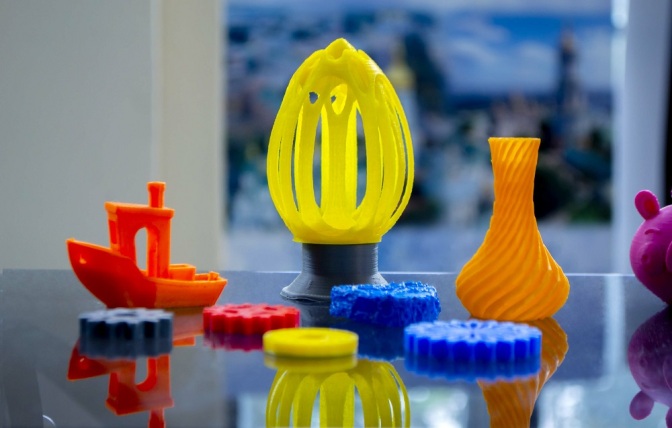
3d printing service

Many startups aim to make 3D printing accessible to the masses. But no business can enhance the popularity and accessibility of additive manufacturing without promoting training and awareness aggressively. Many 3D companies in India already create awareness and train enthusiasts through training programs and workshops.

The consistent growth of 3D printing will boost the popularity of relevant courses and training programs. Many students and professionals will join such courses to create solid objects by combining the right 3D printer and filaments. Many students will join 3D printing courses to enhance their career prospects.

As highlighted by several market researchers and analysts, the 3D printing industry in India will grow consistently and steadily in the future. But the future of 3D printing in India will be driven by the way businesses and startups address the existing and emerging channels. Both private and public sectors have to take several initiatives to make advanced 3D printing technologies popular and affordable in various parts of the country in the short and long runs.

References:

https://manufactur3dmag.com/indian-3d-printing-industry-highlights-of-the-year-2020/

https://3dprintingindustry.com/news/100-3d-printing-experts-predict-the-future-of-3d-printing-in-2030-167623/

https://www.think3d.in/3d-printing-business-in-india/

https://www.electronicsb2b.com/eb-specials/industry-report/3d-printing-business-opportunity/

https://3dprint.com/271107/3d-printing-in-india-slow-adoption-what-the-future-holds/

Saturday, 14 August 2021

Best 3D Printing Service Providers in India

You can produce a product or item using a wide range of 3D printers. Also, you have the option to choose from a variety of 3D printing filaments and materials. You can obtain a high-quality and high-precision item only by combining the right 3D printing technology with the right 3D printing filaments. 3D printing service providers in India make it easier for you to produce a variety of three-dimensional consumer or industrial products without investing in a 3D printer and buying 3D printing filament.

Most Indian 3D printing service providers allow you to choose from several 3D printing services according to the precise needs of your project. But you must remember that the quality of 3D printing services differs across providers. You can obtain a high-quality and high-precision item only by comparing the experience, expertise, and reputation of some of the best 3D printing service providers in India. We help you to compare some of the leading providers based on the quality of their 3D printing services.

Shortlisting and Comparing Some of the Best 3D Printing Service Providers in India

3D Print World

3D Print World allows you to choose from a variety of 3D printing services – 3D rapid prototype services, 3D mechanical CAD designing services, 3D mechanical CAD prototyping services, and CAD CAM designing services. The 3D printing services provided by this Mumbai-based company help you to convert various ideas and concepts into a digital file and obtain a three-dimensional item based on the digital file. You also have the option to customize the 3D printing services according to your precise needs by getting the assistance of experienced domain experts.

Aurum3D

In addition to a variety of 3D-printed items, Aurum3D offers 3D printing, 3D designing, and 3D scanning services. The Bangalore-based 3D printing service provider allows you to avail of FDM, SLA, and SLS 3D printing services. Hence, you can get the desired prototype or model by availing of the appropriate 3D printing services. The in-house team at Aurum3D has expertise in delivering customized 3D printing services to businesses from various industries – manufacturing, automotive, aerospace, healthcare, and education. Hence, you can trust Aurum3D to high-quality and high-precision 3D-printed items.

VOiLA 3D

VOiLA 3D offers a slew of 3D printing services, including FDM 3D printing services and SLA 3D printing services. Also, the Bangalore-based 3D printing company allows you to choose from a wide range of 3D printing materials – PLA, ABS, nylon, polycarbonate, and food contact safe thermoplastic. You can obtain a model, prototype, part, or product simply by sharing a 3D model. The domain experts at VOiLA 3D will send you a quote after reviewing the 3D model and 3D print the item once you send the order and payment confirmation. 

3D Technique

In addition to selling FDM 3D printers, 3D Technique offers 3D designing services, 3D printing services, and 3D scanning services. This Gujarat-based 3D printing company allows you to produce three-dimensional items using a variety of 3D printing technologies – FDM, SLS, SLA, DLP, and Polyjet. Also, you have the option to choose from several 3D printing filaments according to the precise needs of your project. 3D Technique delivers the 3D-printed item at your doorstep based on the digital file share by you. It further helps you to customize the 3D printing services without escalating costs.

3Ding

In addition to selling and renting 3D printers, 3Ding offers 3D designing, 3D printing, and 3D scanning services. You can avail of the 3D printing services to get a physical model, part, prototype, or product by uploading your digital file and selecting the 3D printing technology/filament. Also, you can get the digital file created by experienced 3D artists by availing of 3D designing services. 3Ding has already delivered over two million 3D-printed parts to clients from different industries. It further allows you to get a single item by availing of 3D printing services.

Think3D

Along with selling 3D printers, 3D scanners, and 3D filament, Think3D provides 3D designing, 3D printing, and 3D scanning services. This Telangana-based 3D company allows you to choose from a variety of 3D printing services according to the precise needs of your project. Hence, you can get the desired item using widely used 3D printing technologies like FDM, SLA, SLS, or DMLS. The engineers at Think3D have already 3D-printed prototypes for enterprises across industries. Hence, they can deliver high-precision 3D-printed items by combining the right 3D printing technology and filament.

Global3DHub

In addition to supplying 3D printers and 3D printing filaments, this Rajasthan-based 3D printing company offers 3D printing and rapid prototyping services. You can avail of rapid prototyping services to get solid three-dimensional items based on ideas and concepts. At the same time, you can get customized 3D printing services to get items physically without putting in extra time and effort. You can share the digital file with the Global3DHub and get the desired item by combining the appropriate 3D printing technology and filament.

3DigiPrints


3DigiPrints helps you to create prototypes rapidly by making accuracy and authenticity the key points in the 3D printing process. You can avail of the 3D printing services to create prototypes in four simple steps by uploading the 3D model in STL format. The team at 3DigiPrints will help you to choose the right 3D printer and 3D printing filament according to the precise needs of your project. Also, 3DigiPrints delivers the 3D-printed item to your doorstep. Also, you can avail of the rapid prototyping services to create a 3D model that replicated your ideas accurately.

3DBazaar

Along with selling 3D printers, 3D Bazaar helps you to build prototypes rapidly by offering designing services and 3D printing services. You can avail of engineering designing services and organic designing services to design complex shapes and patterns using CAD software. At the same time, the 3D printing services provided by 3D Bazaar helps you to get prototypes physically simply by uploading the digital file in OBJ or STL format. You also have the option to choose from a slew of 3D printers and 3D printing filaments while uploading the 3D model.

In India, you have the option to choose from many 3D printing service providers. But you can get high-quality and high-precision 3D printing services only by comparing the leading providers using a variety of parameters. The comparison will help you to choose the best Indian 3D printing service provider for your project.

Keyword: 3D printing service providers

References

https://www.cati.com/blog/2018/08/3d-printing-parts-services-need/

https://technology.siliconindia.com/ranking/3d-printing-service-providers-2019-rid-576.html

https://www.linkedin.com/pulse/top-10-india-based-3d-printing-services-company-bring-engineering

Monday, 9 August 2021

9 Innovative Applications of 3D Printing for Automotive Industry

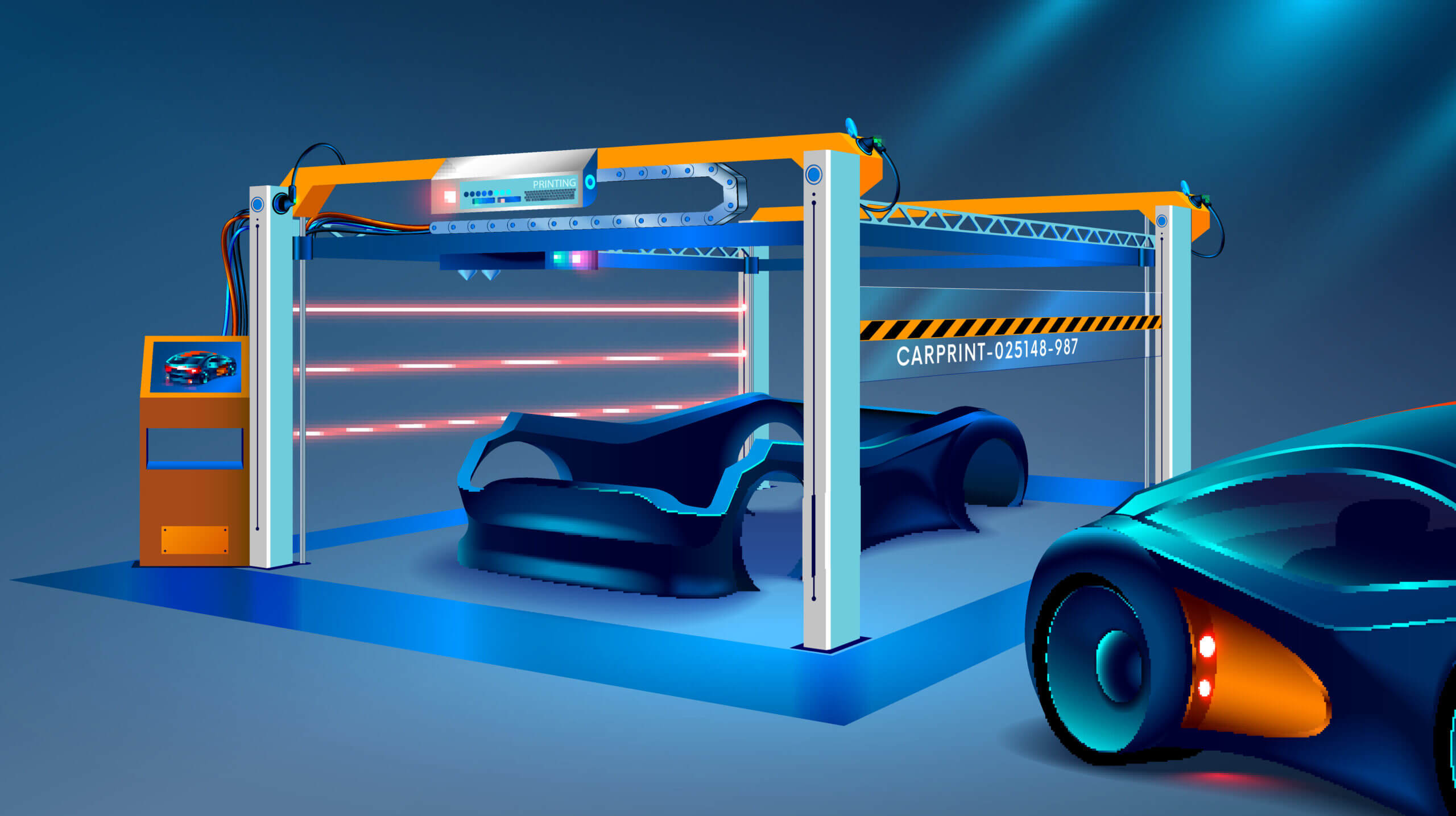
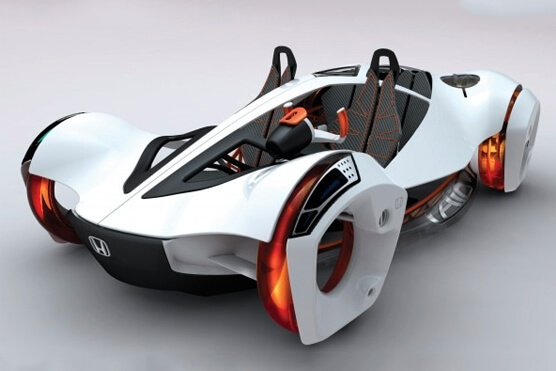
Automotive companies have been leveraging 3D printing technologies for quite some time to drive innovation and curtail costs. Initially, 3D printing technologies were used by automotive companies for rapid prototyping. But many automotive manufacturers these days incorporate 3D printing into every process and function. Also, many automotive companies have announced their plan to launch 3D-printed cars in the near future.

According to FutureWise Market Research & Reports, “The global automotive 3D printing market is expected to value over US $ 3 Billion by 2027 end and register a CAGR of 26.1% during the forecast period, 2020 to 2027. The automotive industry is incorporating 3D printing into almost all of its processes and functions, right from designing prototypes, manufacturing, concept designing, to end-to-end repairs.

The forecast report depicts the growing significance of 3D printing technologies for the automotive industry. The common applications of 3D printing for the automotive industry include accelerating production, reducing turnaround time, and curtailing operational costs. But automotive companies have been creating new use cases regularly by applying and leveraging 3D printing technologies innovatively. We are highlighting some of the exciting and innovative automotive 3D printing applications.


9 Exciting Use Cases and Applications of 3D Printing for Automotive Industry

1) Launching 3D-Printed Vehicles

Most vehicles these days contain a variety of 3D-printed parts and components. But anautomotive company has already launched the world’s first 3D-printed car. According to EnduranceWarranty.com, “Local Motors’ solution to changing the way we make cars is the ‘Strati,’ the world’s first 3D-printed car. It’s a humble, yet uniquely sleek-looking machine. It was built, or rather, printed in Detroit, in collaboration with Oak Ridge National Laboratory in Tennessee.” The customers will soon have the option to choose from conventional and 3D-printed vehicles while visiting a local dealership.

2) Driving Vehicle Electrification

The growing demand for greener transportation options has made it essential for automotive companies to accelerate the electrification of vehicles. But no automotive company can electrify vehicles only by leveraging cutting-edge electric technologies. It has to focus extensively on focus on designing new lightweight components. 3D printing technologies enable engineers to design and evaluate lightweight components by facilitating overnight prototyping. Also, they can make changes to the prototypes regularly to reduce the overall weight of the electric vehicle.

3) Designing Connected Vehicles

The connected cars communicate and interact with a variety of nearby devices using both embedded and portable communication systems. Most connected cars are designed with complex components like antennas and sensors. The traditional manufacturing technologies keep sensors separated from the vehicles. But automotive companies leverage 3D printing technologies to create connected vehicles with embedded sensors. The embedded sensors make the vehicle gather data reliably. Also, engineers can save both time and resources by 3D-printing the sensors and antennas.

4) Accelerating Prototyping Process

3D printing technologies enable automotive companies to accelerate prototyping and concept designing. Engineers can combine appropriate 3D printing technology and filament to convert design concepts and ideas into physical prototypes. 3D printing further helps engineers to evaluate concept designs without increasing filament usage and wastage. Leading automotive companies invest in high-end 3D printers to obtain and evaluate convincing proofs of concepts in a few hours.

5) Creating Custom and Complex Parts

The conventional manufacturing methods increase the overall cost of producing custom and complex parts hugely. But automakers can save both time and cost by 3D-printing custom and complex parts. One of the common applications of 3D printing for the automotive industry is the creation of custom and complex car parts on demand without sacrificing functionality and performance. Most automotive companies these days 3D-print car parts to abandon and transform conventional manufacturing methods.

6) 3D-Printing Spare and General Parts

The flexible nature of 3D printing enables engineers to experiment with a wide variety of hardware and filament. Also, engineers can easily curtail costs by reducing material consumption and cost. That is why; automotive companies these days 3D-print a variety of spare parts and general parts. They minimize the dependence on the supply chain by 3D-printing spare parts on demand. At the same time, they leverage 3D printing technologies to assemble multiple parts or components into a single part.

7) Manufacturing Tools Internally

Earlier, automotive companies were outsourcing the production of manufacturing aids and tools to save both time and resources. But the dependence on machining service providers made it difficult for automakers to speed up time-to-market. 3D printing technologies create opportunities for automakers to produce tools and manufacturing aids internally. The automotive companies can further control the production process without escalating costs. They can further experiment with 3D printing filaments to manufacture innovative tools and replace metal components with plastic components.

8) Driving Sales of Classic and Vintage Cars

According to Bloomberg.com, “From Bentley to BMW, Polestar to Porsche, new-car sales have slumped in 2020. Sales of classic cars, on the other hand, have remained positively stable.” But no automotive company can boost the sale of classic cars and vintage cars without ensuring the supply of components and spare parts. 3D printing technologies enable automakers to support the low-volume production of parts for vintage and out-of-production cars on demand. The leading automakers already leverage 3D printing to supply rare spare parts in both metal and plastic on demand.

9) Supporting Customization and Personalization

Many buyers these days customize and personalize vehicles by availing of a variety of aftermarket parts and services. Many automakers already attract and impress buyers by providing them with many personalization and customization options. They leverage 3D printing technologies to customize vehicles as well as personalize the experience. The leading automobile manufacturers allow customers to customize vehicles by ordering 3D-printed parts and panels. The buyers also have the option to make the vehicle stand out from the crowd by choosing from a wide range of colors and patterns.


3D printing service providers have the potential to transform the automotive industry by facilitating the electrification of vehicles. The customers will soon have the option to choose from many 3D-printed cars and vehicles. That is why; new applications and use cases of 3D printing for the automotive industrywill be created regularly in the future.

Keyword: applications of 3D printing for automotive industry

References

https://all3dp.com/2/coolest-3d-printed-cars/

https://www.endurancewarranty.com/learning-center/news/first-3d-printed-car-makes-debut/

https://amfg.ai/2020/09/03/3d-printing-in-the-automotive-industry-4-major-digital-manufacturing-trends/

https://formlabs.com/asia/blog/3d-printed-car-how-3d-printing-is-changing-the-automotive-industry/

https://www.3dcastor.com/post/the-best-applications-of-3d-printing-in-the-automotive-industry

https://archer-soft.com/blog/how-3d-printing-used-automotive-industry

https://www.hubs.com/knowledge-base/automotive-3d-printing-applications/#applications

https://amfg.ai/2019/05/28/7-exciting-examples-of-3d-printing-in-the-automotive-industry/

Tuesday, 27 July 2021

3D Printing Applications in Medicine and Surgery

3D printing technologies have been transforming the healthcare industry since the 1990s. But the demand for and adoption of 3D printing technology by healthcare companies has been increasing steadily in recent years. Most healthcare companies these days use 3D printers to produce three-dimensional models that facilitate the personalization of treatment and minimization of operative risks.

According to a report published by Data Bridge Market Research, “Global healthcare 3D printing market is registering a healthy CAGR of 19.22% in the forecast period of 2019-2026. This rise in the market can be attributed to the increased demand for specific 3D printing, increasing applications for medical treatment and government investments in 3D printing project.”


The forecast depicts the increase in 3D printing applications in medicine and surgery. Many medical professionals use 3D-printed devices and instruments. Likewise, many surgeons use 3D printing technologies to preplan and perform surgical procedures accurately. We can assess the significance of 3D printing for the healthcare industry based on some of the innovative use cases on medical 3D printing technologies.

8 Innovative 3D Printing Applications in Medicine and Surgery

1) Bioprinting Organs and Tissue Structures

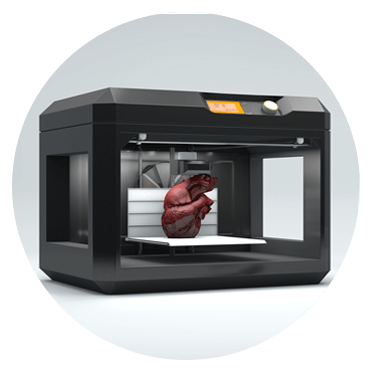
According to Science.org.au, “Bioprinting can produce living tissue, bone, blood vessels and, potentially, whole organs for use in medical procedures, training and testing.” Bioprinting is often described as an extension of 3D printers. The surgeons use advanced 3D printers to generate patient-specific tissue-like structures using bioinks as the primary material. The 3D-printed tissue-like structures are personalized for a patient with optimal accuracy and precision. Many healthcare companies have been investing in research to create fully functional organs for patients with grave organ failure by leveraging advanced 3D printing technologies.

2) Producing New Surgical Instruments

Like other enterprises, healthcare companies use 3D printing services to facilitate rapid prototyping. 3D printing makes it easier for medical device manufacturers to create and test prototypes of new devices without incurring huge expenses. At the same time, 3D printing technologies help surgeons and physicians to communicate design ideas clearly and unambiguously. Researchers have been using combining different 3D printing technologies and materials to produce new medical devices and surgical instruments regularly. Also, many companies these days use 3D printers to produce instruments and devices in a short amount of time.

3) Creating Medical Phantoms

According to Radiopaedia.org, "A phantom or imaging phantom is a highly specialized object utilized in medical imaging for quality control, equipment calibration, dosimetry and education." Researchers and physicians these days use phantoms for training, testing, and research purposes to eliminate the need to use a living subject.

Advanced 3D printing technologies make it easier for researchers to create medial phantoms that replicate patient-specific organs accurately in various medical settings. Doctors have already used 3D printing to create phantoms of kidneys and artillery before operations. The 3D-printed phantoms are expected to transform organ transplant procedures in the future.

4) Patient-Specific Drug Delivery

Often patients have to consume multiple pills according to the drug dosage prescribed by doctors. They have to purchase additional pills to adhere to drug dosage. 3D printing technologies create opportunities for pharmaceutical companies to transform and personalize drug delivery completely.

A pharmaceutical company can leverage 3D printers to produce and deliver dosage for patients individually. Also, they can deliver drugs on demand according to the changes in a patient’s dosage profile. Many healthcare companies have invested in R&D to produce 3D-printer devices that deliver drugs according to the treatment plan for every patient.

5) Personalized Surgical Models

3D printers produce three-dimensional objects and models from digital files. The surgeons use 3D printing technologies to produce anatomical models based on the scanned patient data. They create a digital file based on the CT and MRI scans and produce 3D-printed anatomical models using the digital file. At present, 3D-printed anatomical models are used widely by healthcare professionals across the world while planning routine and complex surgeries. They help surgeons to prepare better for complex surgeries. Also, hospitals leverage 3D-printed anatomical models to curtail both time and cost.

6) Accurate Surgical Preplanning

While planning surgical procedures, surgeons cannot evaluate and assess a patient’s anatomy accurately on a computer screen. Many surgeons these days 3D-print anatomical models to gather additional and accurate information during preoperative planning. The 3D-printed anatomical models help surgeons to study and understand the impaired organs elaborately before the operation.

The surgeons can leverage the 3D model to explore various approaches and decide the most appropriate approach during the planning process. Hence, it becomes easier for the surgeon to reduce the operation time while improving the operational outcome. 3D printing technologies will become an integral part of surgical planning in the future.

7) Patient-Specific Prosthetics

As a branch of surgery, prosthetics deal with replacing missing body parts with artificial structures or artificial devices. Prosthetics make it easier for disabled people to live a normal life. But the prosthetists have to put extra time and effort to design prosthetics according to the dimensions measured by them.

3D printing technologies enable prosthetists to produce anatomic prosthetics precisely and accurately using high-quality imaging technologies. A prosthetist can further use a 3D printer to produce patient-specific prosthetics on demand. Many market analysts believe that 3D printing technologies will make prosthetics affordable for millions of disabled people in the future.

8) Driving Medical Research and Development

3D printing technology is transforming medicine and surgery by facilitating medical research and development (R&D). Many doctors and researchers these days use 3D printers to develop new treatments for various diseases by producing automated cell structures. The automated cell structures make it easier for physicians and surgeons to determine if a new drug is toxic to humans and animals during preclinical trials. Also, 3D printing technologies enable researchers to develop new clinical solutions, create innovative devices, and personalize various treatments without investing in extra time and effort.


3D printing is one of the disruptive technologies that are transforming the healthcare industry. In addition to leveraging 3D printing technologies, most healthcare industries these days invest in R&D. The combination of demand and research will create many new 3D printing applications in medicine and surgery in the near future.

Keyword: 3D printing applications in medicine

References:

httpa://Formlabs.com/asia/blog/3d-printing-in-medicine-healthcare/

https://www.marketdataforecast.com/market-reports/3d-printing-healthcare-market

https://www.ncbi.nlm.nih.gov/pmc/articles/PMC6139809/

https://www.think3d.in/wp-content/uploads/2018/07/Surgery-Planning-Case-Study.pdf

https://www.researchgate.net/publication/327320182_The_clinical_use_of_3D_printing_in_surgery

https://www.ncbi.nlm.nih.gov/pmc/articles/PMC4875895/

https://www.sculpteo.com/en/3d-learning-hub/applications-of-3d-printing/medical-3d-printing/

https://formlabs.com/asia/blog/3d-printing-in-medicine-healthcare/

https://www.science.org.au/curious/people-medicine/bioprinting

https://radiopaedia.org/articles/phantom

Saturday, 10 July 2021

Applications of FDM 3D Printing

Unlike other 3D printing technologies, fused deposition modeling (FDM) or fused filament fabrication (FFF) prints objects, items, or models by depositing melted filament continuously and selectively. The FDM 3D printers are designed with heated nozzles. The heated nozzle melts the material and deposits the melted material to a build platform layer by layer by following a predefined path.

While using FDM 3D printing technologies, engineers and printers often use thermoplastic filaments. However, they use a wide range of materials according to the nature and requirements of the item or model to be 3D-printed - polylactic Acid (PLA), acrylonitrile butadiene styrene (ABS), polyethylene terephthalate (PET), polyethylene terephthalate glycol (PETG), and thermoplastic polyurethane (TPU). The flexible and durable nature of thermoplastic contributes towards increasing the popularity of FDM 3D printing technology.


As highlighted by several market studies, FDM or FFM is currently one of the most widely used 3D printing technologies. Many manufactures opt for this 3D printing technology to produce basic proof-of-concept models without increasing time and cost. The option to choose from a wide range of FDM materials further helps engineers to produce models and objects according to precise business requirements. We can identify the popularity of this 3D printing technology based on a slew of FDM 3D printing applications and use cases.

Understanding Common Applications of FDM 3D Printing

Evaluating Design Ideas

FDM 3D printing is used widely by automobile companies. Leading car manufacturers leverage this form of 3D printing to test design ideas quickly and repeatedly. FDM 3D printers help them to evaluate design ideas by producing parts that are both solid and durable. Also, the manufacturers get the opportunity to experiment with various FDM 3D printing materials while evaluating innovative design ideas. Hence, it becomes easier for car manufactures to reduce time to market, curtail build time, and improve workflow. At the same time, this form of 3D printing helps engineers to produce small and detailed parts on demand.

Producing Prototypes that Withstand Testing

Often engineers expose a prototype to heat and chemicals to produce accurate test results. They look for a 3D printing technology that helps them to produce prototypes that can withstand rigorous and repetitive testing successfully. In addition to being flexible and durable, FDM 3D printing materials are effective in enduring heat and chemicals. Also, they can withstand mechanical stress effectively during multiple testing processes. Many manufacturers leverage FDM 3D printing technology to produce prototypes that can be tested under multiple and varied real-world conditions.

Reducing Weight and Altering Features

The aircraft and spacecraft companies frequently explore ways to boost performance by reducing weight and altering the features of various components. Thermoplastics are one of the flexible, strong, and durable 3D printing materials. Also, they are used widely as high-performing and engineering-grade materials. The thermoplastics make FDM 3D printing one of the widely used technologies in the aerospace industry.   At the same time, aerospace companies, like automobile companies, leverage FDM 3D printing to evaluate and revise prototypes frequently.

Facilitating Low Volume Production


Like other 3D printing technologies, FDM helps engineers to facilitate the low-volume production of complex parts. The engineers can use an industrial-grade thermoplastic filament to get complex parts that are both strong and durable. At the same time, they can leverage FDM 3D printers to produce parts with complex geometries. The engineers can scale up the part or model simply by increasing the size of the build platform.

Producing Proof-of-Concept Models

Many engineers leverage FDM 3D printing to evaluate ideas and verify concepts by producing proof-of-concept models. FDM enables engineers to experiment with various forms of thermoplastic to provide the proof-of-concept model with the desired strength and characteristics. At the same time, the engineers can produce multiple versions of the model quickly and repeatedly to make it easier for decision-makers to evaluate concepts and ideas during the product development process.

Producing and Evaluating Consumer Products

The leading manufacturers leverage FDM 3D printing technology to use the same material to produce both prototypes and finished products. They use an FDM 3D printer to create and evaluate detailed parts of varying sizes. Also, thermoplastics make it easier for engineers to 3D-print ready-to-use consumer products like whitewater canoes or Lego bricks. Many consumers and hobbyists these days use FDM 3D printers to create a variety of home decors and accessories without relying on external suppliers.

Creating Specialized Manufacturing Tools

Popular design tools like computer-aided design (CAD), computer-aided manufacturing (CAM), and computer-aided engineering (CAE) enable engineers to design customized and specialized manufacturing tools. The engineers use FDM 3D printers to convert the designs into real-time tools. Many engineers leverage this popular 3D printing technology to create new tools, while others finetune the existing manufacturing tools by experimenting with various types of thermoplastic. FDM 3D printers make it easier for engineers to create a variety of ready-to-use tools.

Leveraging Material Flexibility

FDM 3D printer allows engineers to experiment with many forms of thermoplastic. Each type of thermoplastic has its own pros and cons. But the engineers can customize the strength, durability, and characteristics of the 3D-printed model or product by choosing the right FDM materials. For instance, they can use PLA to produce three-dimensional objects using environment-friendly thermoplastic produced from natural products. Likewise, they can enhance the 3D-printed object’s stiffness and durability by choosing ABS.

Promoting Hands-on Learning

The affordable nature of FDM 3D printers creates opportunities for educational institutions to expose students to various learning experiences. Many schools and colleges invest in FDM 3D printers to promote hands-on training. In addition to explaining various concepts to students, teachers use FD 3D printers to convert the concepts to three-dimensional objects. The FDM 3D printers enable students to explore unlimited learning opportunities. Many students use FDM 3D printers at home to unleash their creativity and imagination.

At present, FDM is one the most widely used 3D printing technologies. Also, the manufacturers and engineers have the option to choose from a wide range of FDM materials. That is why; it becomes easier for them to produce a variety of three-dimensional models, objects, parts, and items using FDM 3D printing technology.

Keyword: FDM 3D printing applications

References:

https://www.hubs.com/knowledge-base/introduction-fdm-3d-printing/

https://www.treatstock.com/guide/article/118-express-guide-of-fdm-3d-printing-materials

https://www.marketwatch.com/press-release/fused-deposition-modelingfdm-3d-printing-market-research-report-2021-industry-latest-news-top-company-analysis-research-methodology-and-forecast-to-2025-2021-03-12

https://blog.trimech.com/top-4-industry-uses-for-fdm-printers

https://www.livescience.com/39810-fused-deposition-modeling.html

https://www.axisproto.com/solutions/fdm/

https://www.stratasysdirect.com/technologies/fused-deposition-modeling

https://www.stratasys.com/fdm-technology

Saturday, 12 June 2021

Benefits of 3D Printers for School Education

The applications and use cases of 3D printing technologies vary across industries. Enterprises from various industries these days use different 3D printing technologies - fused deposition modeling (FDM), selective laser sintering (SLS), and stereolithography (SLA) – to facilitate rapid prototyping and producing fully functional parts. At the same time, the number of educational institutions investing in various 3D printers has been increasing consistently. Also, many companies have been designing and customizing 3D printers for various educational institutions.

According to a market forecast and analysis report released by Technavio, “The 3D printing market size in the education sector has the potential to grow by USD 687.56 million during 2021-2025, and the market’s growth momentum will accelerate during the forecast period.”


The industry forecast report depicts the huge benefits of 3D printers for schools, colleges, universities, and other educational institutions. Many schools already leverage 3D printing technologies to modernize and transform their learning environments. Also, teachers and educators have been creating new use cases 3D printers for education consistently by making students acquiring skills for the future. If your school is yet to purchase a 3D printer, it is time for you to understand some of the important benefits of 3D printers for schools.

Understanding 9 Important Benefits of 3D printers for Schools

1. Set up Visual Learning Environments

Many educational institutions already leverage 3D printing technologies to transform and modernize conventional learning environments. They provide teachers and students with access to 3D printers to set up a visual learning environment. In the visual learning environment, students do not acquire knowledge simply only by listening to teachers or reading books. In addition to interacting with teachers, they can visualize the concepts and ideas by producing three-dimensional objects in the classroom environment. The visual learning environment will help schools to keep the curriculum relevant in the longer run.

2. Implement STEAM Education

Many schools these days provide future-proof learning by implementing the STEAM education approach. Unlike conventional learning approaches, STEAM emphasizes integrating areas of science, technology, engineering, arts, and mathematics. Many schools already use 3D printing as a classroom technology to implement STEAM education. They allow students to become creators and designers using knowledge and unleashing creativity simultaneously. Also, access to 3D printers enables students to shape their ideas and imaginations physically.

3. Foster Innovation and Invention


Several studies recommend schools to encourage students to become creators and innovators. In addition to focusing on making students acquire and retain knowledge, schools these days focus extensively on fostering creativity and innovation. 3D printers help schools to create opportunities for students to create objects and solutions using their creativity and imagination. Educators can encourage and motivate students to become creators and inventors by providing access to 3D printers for school.

4. Boost Student Engagement

Educators these days explore ways to keep students engaged and interested in both conventional and virtual classrooms. 3D printing technologies make it easier for teachers to make the learning experience both different and exciting. Teachers can 3D-print objects to make students understand complex concepts and theories clearly and differently. The change in approach helps schools to convert reluctant learners into active learners.

5. Deliver Hands-on Learning

In the age of digital communications, schools have to emphasize delivering hands-on learning. The 3D printers for schools help teachers to create opportunities for students to acquire knowledge through action and experience. In addition to explaining concepts, they can make students observe and inspect the concepts in solid three-dimensional form.

6. Prepare Students to Solve Real-World Problems

Many people these days use 3D printers to produce home decors, household accessories, and functional repair items. Also, 3D printing technologies encourage many people to solve simple real-world problems by producing various items and objects. In addition to delivering hands-on training, schools can prepare and encourage students to solve a variety of real-world problems by providing access to 3D printers. There are many instances when school children solved in their communities using 3D printers.

7. Facilitate Collaboration and Camaraderie

3D printing or additive manufacturing is a multistep process. An individual student cannot produce a variety of objects or items without collaborating and networking with others. Hence, schools can use 3D printing technologies as classroom technology to make students acquire important and useful soft skills like communication, collaboration, cooperation, and team spirit. Many students these days become part of online communities to learn how to use 3D printers more effectively and how to choose the right 3D printing material.

8. Foster Critical Thinking and Design Thinking

Every school can prepare students to become entrepreneurs and innovators by focusing on the development of critical thinking and design thinking. Access to 3D printers helps students to visualize their ideas and unleash their creativity. The teachers can make students think critically and hone problem-solving skills by assigning projects. Also, they can motivate students to solve a variety of real-time problems by thinking like designers and innovators. Many teachers these days create new use cases to make 3D printing technologies complement and extend the preset curriculum perfectly.

9. Encourage Students to Pursue STEM Degrees

According to a study conducted by the Pew Research Center, “About half of adults (52%) say the main reason young people don’t pursue STEM degrees is they think these subjects are too hard.”  As mentioned earlier, 3D printers help schools to make STEM education easier for students by integrating conventional and hands-on learning. The students can use 3D printers to understand complex concepts and theories. The hands-on learning will help and motivate students to pursue STEM degrees in the future.

Aurum3D helps schools to leverage 3D printing technologies in two distinct ways – launching affordable 3D printers and providing 3D printing services. The 3D printing services help educational institutions to produce three-dimensional items from digital models without investing in a 3D printer. At the same time, the 3D printer launched by Aurum3D helps schools to convert 3D printing technology into one of the commonly used classroom technologies.

Keywords: Benefits of 3D printers, 3D printers for school, 3D printers for education

References

https://www.makersempire.com/7-benefits-of-using-3d-printing-technology-in-education/

https://digilab.dremel.com/blog/five-benefits-using-3d-printers-education

https://www.makerbot.com/stories/3d-printing-education/5-benefits-of-3d-printing/

https://www.theeducatoronline.com/k12/technology/e-learning/4-benefits-of-3d-printing-for-schools/245670

https://edtechmagazine.com/k12/article/2019/06/resurgence-3d-printers-modern-learning-environments-perfcon

Most Innovative 3D Printing Companies in India

In the age of Industry 4.0, no business can increase revenue, gain market share, and promote customer loyalty without fostering innovations....