Showing posts with label FDM 3D printing. Show all posts

Monday, 14 November 2022

What is FDM 3D Printing?

The widely-used 3D printing technologies can be broadly divided into two categories – consumer and industrials. Consumer 3D printers are found in homes, offices, and educational institutions. At the same time, enterprises from various sectors use industrial-grade 3D printers to switch from subtractive or conventional manufacturing to additive manufacturing.

Fused Deposition Modeling (FDM) is a 3D printing technology that is used widely by individuals and enterprises. The usage statistics posted on Statista suggest that FDM is currently the most commonly used 3D printing technology.Also, FDM drives the steady and consistent growth of the global 3D printing market.

What is FDM 3D Printing?
FDM 3D Printing

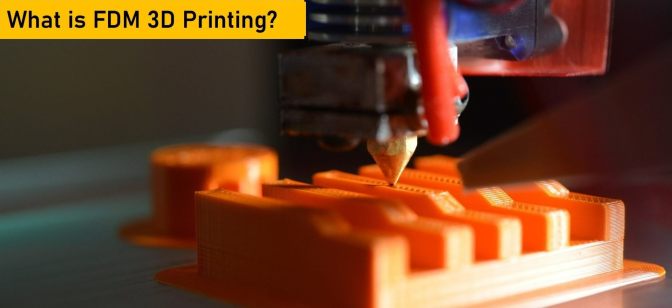
Like other 3D printing technologies, FDM produces solid parts from digital files. Also, it creates the parts by depositing materials layer by layer. But FDM, unlike other 3D printing technologies, creates parts using the material extrusion method.

FDM 3D printers are designed with nozzles through which the thermoplastic filaments are extruded. The heated nozzle melts the filament and deposits the melted filament onto the build platform layer by layer. The material extrusion method makes FDM scores over other 3D printing technologies in several categories – ease of use and cost-efficiency.

How Do FDM 3D Printers Work?

While planning an FDM 3D printing project, engineers have the option to choose from a wide range of thermoplastic materials. They fed the thermoplastic filament into the 3D printing machines in the shape of plastic threads through a nozzle.

They melt the filament by heating the nozzle. The heated nozzle deposits the melted filament layer by layer over the build platform. The thermoplastic cools and solidifies gradually as the nozzle moves across the base. Also, they form a solid bond with the earlier layer.

Once a layer is printed, the build platform descents or ascents to facilitate the formation of the next layer. These steps are repeated till the printer created the part fully according to the digital 3D model.

Engineers always choose the FDM 3D printer according to the build size and layer height. Also, they customize the FDM 3D printing process by adjusting important parameters like build speed, nozzle temperature, cooling fan speed, and build platform temperature.

What are the Material Options for FDM 3D Printing?

FDM beats other 3D printing technologies in the category of material options. While planning the FDM 3D printing process, engineers have the option to choose from a wide range of feedstock materials or filaments. For instance, they can choose from widely-used polymers like PLA, PET, ABS, Nylon, TPU, and PC.

Also, they can improve the physical properties of the filament by opting for composite materials like Tough PLA which is produced by combining PLA and ABS. Likewise; they can make 3D-printed parts effective in resisting mechanical stress by opting for fiber-filled materials.

Leading manufacturers have been producing innovative FDM 3D printing filaments regularly. The affordability and availability of these polymer and composite filaments contribute hugely toward making FDM the most commonly used 3D printing technology.

What are the Common Applications of FDM 3D Printing?

Concept Modeling

Engineers use concept models to understand precise requirements or identify potential issues before starting production. FDM 3D printing machines and materials help them create concept models without putting in extra time and resources.

Rapid Prototyping

Engineers test a concept or evaluate a process by creating prototypes. They use FDM 3D printers to produce preliminary versions of a product in a short amount of time. Also, they leverage the printer to make several changes to the prototype during the testing process.

Low-Volume Manufacturing

FDM 3D printing helps manufacturers switch from subtractive manufacturing to additive manufacturing. A manufacturer can use industrial-grade FDM 3D printers to facilitate low-volume production of complex parts without using conventional tooling.

End Part Fabrication

Many companies these days prefer printing end parts to producing end parts. They leverage FDM 3D printing technology to reduce the time and costs required to fabricate end parts. Also, they can boost the part’s quality and durability using the appropriate FDM 3D printing material.

Manufacturing Tool Development

FDM 3D printing creates opportunities for engineers to produce next-generation manufacturing tools. Engineers can reduce the time and resources required to fabricate jigs, fixtures, and other manufacturing tools using industrial-grade FDM 3D printers.

Making Consumer Products

Access to FDM 3D printers creates opportunities for students and hobbyists to produce a variety of consumer products. Students showcase their creativity and skill by producing innovative toys, home decor, and gift items using FDM 3D printers. At the same time, hobbyists use FDM 3D printing technologies to create new use cases and meet emerging needs regularly.

What are the Pros and Cons of FDM 3D Printing Technology?

Pros

  • Less complex than other 3D printing technologies
  • Less expensive than other 3D printing technologies
  • Availability of a wide range of FDM 3D printing materials
  • Option to reuse FDM 3D printing materials
  • Perform post-processing activities without investing in specialized tools and expensive liquids.
  • FDM 3D printers are easy to store and move
  • New-age FDM 3D printers support cloud server printing

Cons

  • FDM printers need more time to produce a part as they print layer by layer.
  • Engineers have to opt for multidirectional printing to unidirectional printing to make stronger parts.
  • Often misalignment or weak adhesion of layers results in print failure.
  • Engineers must clean and maintain the FDM 3D printer regularly to prevent nozzle clogging.
  • Users can improve safety only by installing the FDM 3D printer in a well-ventilated environment.

Conclusion:

FDM is currently more popular than other 3D printing technologies. Enterprises invest in industrial-grade FDM 3D printers to produce product prototypes and functional parts. At the same time, desktop FDM 3D printers are used widely by students, engineers, and hobbyists. Also, many individuals and enterprises these days avail of FDM 3D printing services to produce physical objects by overcoming constraints related to time, resources, and skills.

Monday, 26 September 2022

FDM 3D Printing Process

Additive manufacturing/3D printing is one of the fundamental technologies driving Industry 4.0. Enterprises leverage various 3D printing technologies to transit from Industry 3.0 to Industry 4.0. But some of these 3D printing technologies are used widely by both individuals and enterprises.

Fused Deposition Modeling (FDM) is one of the 3D printing technologies that are popular with companies, startups, engineers, students, and hobbyists. In addition to being easy-to-use and budget-friendly, FDM 3D printing technology allows you to choose many materials and reuse the filaments.

You can use an FDM 3D printer to convert computer-aided design (CAD) files into solid three-dimensional parts. The machine will create the part by depositing thermoplastic filament onto a print bed layer by layer. But you must remember that FDM 3D printing is a multistep process.

You can customize and streamline the 3D printing process only by choosing the right printer, model material, and support material. Also, you need to convert the CAD file into an STL file. After completing the preliminary tasks, you have to monitor the FDM 3D printing process and perform post-processing activities to produce a part that meets your precise project needs and preset quality standards.

How to Plan and Improve the FDM SLS 3D Printing Process?

FDM 3D Printing Process

Select the Right FDM 3D Printer

Based on your predefined project needs, you have the option to choose from several types of FDM 3D printers. The FDM 3D printing machines differ from each other primarily in two aspects –mechanical nature and operational coordinate system. Hence, you need to compare the FDM 3D printers manufactured by different companies.

Combine the Right Modeling and Support Material

While planning the FDM 3D printing process, you must focus on choosing the right modeling and support materials. The modeling material will form a solid three-dimensional object, while the support material will provide support to the part as it is 3D printed.

You have the option to choose from a variety of modeling materials – ABS, PLA, PET, Nylon, PC, and TPU (flexible). Some of these materials are pure polymer, while others are composites.

Hence, they differ from each other in many aspects – printability, layer adhesion, heat resistance, impact resistance, and stress resistance. In addition to choosing the right modeling material, you must complement it with the appropriate support material.

Convert the CAD File into STL File

FDM 3D printer will produce the part based on a digital 3D model. But you have to convey information to the printer in the form of an STL file. You have to convert the CAD file into an STL file to provide information to the printer in the standard data transmission format.

Set Print or Process Parameters

FDM 3D printers allow you to set various print parameters or process parameters – layer height, build speed, nozzle temperature, build platform temperature, and cooling fan speed. You must decide the build volume and layer height according to the size of the part to be 3D-printed.

The desktop 3D printers support smaller build volumes than industrial 3D printers. If you are using a desktop 3D printer, you have to divide the large parts into smaller parts according to the build volume supported by the machine.

You can create the large part by assembling the small parts after the 3D printing process. However, you can customize the FDM 3D printing process according to precise project needs by setting or adjusting these parameters.

Start the FDM Printing Process

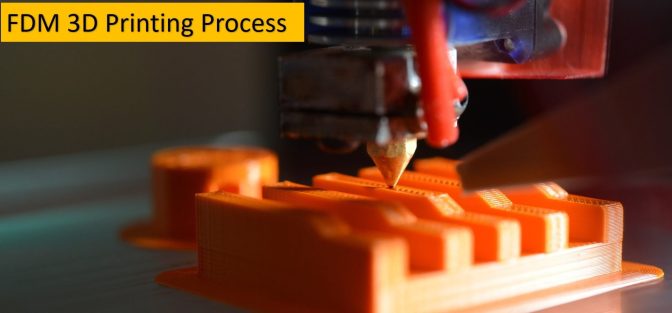
You have to start the FDM 3D printing process by loading the thermoplastic material into the 3D printer. The FDM 3D printer will feed the filament as threads and extrude the melted filament through extrusion nozzles.

Most FDM 3D printers feature extrusion nozzles that deposit the melted filament in both horizontal and vertical ways. The FDM 3D printer will function according to the parameters set by you. Also, it will refer to the STL file to deposit the filament in the right physical dimensions.

The melted filament will cool and solidify gradually after being deposited onto the build platform. But you can reduce the cooling time using fans attached to the extrusion head.

Remove or Separate the Support Material

Once the FDM 3D printing process is over, you have to focus on improving the surface finish by removing or separating the support accurately. You have the option to choose from two distinct support removal methods – standard and dissolvable.

You can remove the support material quickly and effortlessly by opting for the standard method. The method requires you to remove support material by cleaning the surface. However, you have to use needle-nose pliers and dental picks to remove the support material from holes, hollows, and other hard-to-reach places.

You can opt for the dissolvable method when the support material is soluble. This method requires you to remove the support material using the appropriate solvent. You need to keep the 3D-printed part in a bath till the support material is dissolved and separated. However, you must remember that each of these support removal techniques has its pros and cons.

Perform Post-Processing Activities

After removing the support material, you need to improve the 3D-printed part’s look, feel, and finish by performing a variety of post-processing activities – polishing, sanding, priming and painting, gap filling, cold welding, dipping, metal plating, and epoxy coating.

But you must remember that the post-processing activities vary according to the nature and requirements of the 3D-printed part. Hence, you have to combine the post-processing activities according to the 3D-printed part. At the same time, you must perform every post-processing activity accurately and efficiently using the appropriate toolkit.

Conclusion

FDM 3D printing technologies create opportunities for you to produce a variety of parts without putting in extra time and effort. You must focus on customizing the FDM 3D printing process according to the precise needs of each project. At the same time, it is important to improve the dimensional accuracy and print quality by implementing a slew of FDM 3D printing best practices.

However, you can save both time and resources by availing of professional FDM 3D printing services. The leading 3D printing companies use advanced 3D printers and allow you to choose from a variety of filaments. Also, you can customize the FDM 3D printing process by sharing important information related to the part or product required for your upcoming project.

About Aurum3D

We are amongst the major 3D printing service providers in Bangalore, India. We have been providing custom SLA, SLS and FDM 3D printing services to many major industries. Please feel free to get in touch with us for your custom needs, our 3D printing solutions experts will get back to you within one business day.

References

https://all3dp.com/2/cartesian-3d-printer-delta-scara-belt-corexy-polar/

https://www.hubs.com/knowledge-base/fdm-3d-printing-materials-compared/

https://smc-fluidcontrol.com/cooling-systems-in-3d-printing/

https://www.hubs.com/knowledge-base/post-processing-fdm-printed-parts/#support

Saturday, 10 July 2021

Applications of FDM 3D Printing

Unlike other 3D printing technologies, fused deposition modeling (FDM) or fused filament fabrication (FFF) prints objects, items, or models by depositing melted filament continuously and selectively. The FDM 3D printers are designed with heated nozzles. The heated nozzle melts the material and deposits the melted material to a build platform layer by layer by following a predefined path.

While using FDM 3D printing technologies, engineers and printers often use thermoplastic filaments. However, they use a wide range of materials according to the nature and requirements of the item or model to be 3D-printed - polylactic Acid (PLA), acrylonitrile butadiene styrene (ABS), polyethylene terephthalate (PET), polyethylene terephthalate glycol (PETG), and thermoplastic polyurethane (TPU). The flexible and durable nature of thermoplastic contributes towards increasing the popularity of FDM 3D printing technology.


As highlighted by several market studies, FDM or FFM is currently one of the most widely used 3D printing technologies. Many manufactures opt for this 3D printing technology to produce basic proof-of-concept models without increasing time and cost. The option to choose from a wide range of FDM materials further helps engineers to produce models and objects according to precise business requirements. We can identify the popularity of this 3D printing technology based on a slew of FDM 3D printing applications and use cases.

Understanding Common Applications of FDM 3D Printing

Evaluating Design Ideas

FDM 3D printing is used widely by automobile companies. Leading car manufacturers leverage this form of 3D printing to test design ideas quickly and repeatedly. FDM 3D printers help them to evaluate design ideas by producing parts that are both solid and durable. Also, the manufacturers get the opportunity to experiment with various FDM 3D printing materials while evaluating innovative design ideas. Hence, it becomes easier for car manufactures to reduce time to market, curtail build time, and improve workflow. At the same time, this form of 3D printing helps engineers to produce small and detailed parts on demand.

Producing Prototypes that Withstand Testing

Often engineers expose a prototype to heat and chemicals to produce accurate test results. They look for a 3D printing technology that helps them to produce prototypes that can withstand rigorous and repetitive testing successfully. In addition to being flexible and durable, FDM 3D printing materials are effective in enduring heat and chemicals. Also, they can withstand mechanical stress effectively during multiple testing processes. Many manufacturers leverage FDM 3D printing technology to produce prototypes that can be tested under multiple and varied real-world conditions.

Reducing Weight and Altering Features

The aircraft and spacecraft companies frequently explore ways to boost performance by reducing weight and altering the features of various components. Thermoplastics are one of the flexible, strong, and durable 3D printing materials. Also, they are used widely as high-performing and engineering-grade materials. The thermoplastics make FDM 3D printing one of the widely used technologies in the aerospace industry.   At the same time, aerospace companies, like automobile companies, leverage FDM 3D printing to evaluate and revise prototypes frequently.

Facilitating Low Volume Production


Like other 3D printing technologies, FDM helps engineers to facilitate the low-volume production of complex parts. The engineers can use an industrial-grade thermoplastic filament to get complex parts that are both strong and durable. At the same time, they can leverage FDM 3D printers to produce parts with complex geometries. The engineers can scale up the part or model simply by increasing the size of the build platform.

Producing Proof-of-Concept Models

Many engineers leverage FDM 3D printing to evaluate ideas and verify concepts by producing proof-of-concept models. FDM enables engineers to experiment with various forms of thermoplastic to provide the proof-of-concept model with the desired strength and characteristics. At the same time, the engineers can produce multiple versions of the model quickly and repeatedly to make it easier for decision-makers to evaluate concepts and ideas during the product development process.

Producing and Evaluating Consumer Products

The leading manufacturers leverage FDM 3D printing technology to use the same material to produce both prototypes and finished products. They use an FDM 3D printer to create and evaluate detailed parts of varying sizes. Also, thermoplastics make it easier for engineers to 3D-print ready-to-use consumer products like whitewater canoes or Lego bricks. Many consumers and hobbyists these days use FDM 3D printers to create a variety of home decors and accessories without relying on external suppliers.

Creating Specialized Manufacturing Tools

Popular design tools like computer-aided design (CAD), computer-aided manufacturing (CAM), and computer-aided engineering (CAE) enable engineers to design customized and specialized manufacturing tools. The engineers use FDM 3D printers to convert the designs into real-time tools. Many engineers leverage this popular 3D printing technology to create new tools, while others finetune the existing manufacturing tools by experimenting with various types of thermoplastic. FDM 3D printers make it easier for engineers to create a variety of ready-to-use tools.

Leveraging Material Flexibility

FDM 3D printer allows engineers to experiment with many forms of thermoplastic. Each type of thermoplastic has its own pros and cons. But the engineers can customize the strength, durability, and characteristics of the 3D-printed model or product by choosing the right FDM materials. For instance, they can use PLA to produce three-dimensional objects using environment-friendly thermoplastic produced from natural products. Likewise, they can enhance the 3D-printed object’s stiffness and durability by choosing ABS.

Promoting Hands-on Learning

The affordable nature of FDM 3D printers creates opportunities for educational institutions to expose students to various learning experiences. Many schools and colleges invest in FDM 3D printers to promote hands-on training. In addition to explaining various concepts to students, teachers use FD 3D printers to convert the concepts to three-dimensional objects. The FDM 3D printers enable students to explore unlimited learning opportunities. Many students use FDM 3D printers at home to unleash their creativity and imagination.

At present, FDM is one the most widely used 3D printing technologies. Also, the manufacturers and engineers have the option to choose from a wide range of FDM materials. That is why; it becomes easier for them to produce a variety of three-dimensional models, objects, parts, and items using FDM 3D printing technology.

Keyword: FDM 3D printing applications

References:

https://www.hubs.com/knowledge-base/introduction-fdm-3d-printing/

https://www.treatstock.com/guide/article/118-express-guide-of-fdm-3d-printing-materials

https://www.marketwatch.com/press-release/fused-deposition-modelingfdm-3d-printing-market-research-report-2021-industry-latest-news-top-company-analysis-research-methodology-and-forecast-to-2025-2021-03-12

https://blog.trimech.com/top-4-industry-uses-for-fdm-printers

https://www.livescience.com/39810-fused-deposition-modeling.html

https://www.axisproto.com/solutions/fdm/

https://www.stratasysdirect.com/technologies/fused-deposition-modeling

https://www.stratasys.com/fdm-technology

Most Innovative 3D Printing Companies in India

In the age of Industry 4.0, no business can increase revenue, gain market share, and promote customer loyalty without fostering innovations....