Showing posts with label 3d printing banaglore. Show all posts

Monday, 31 October 2022

FDM 3D Printing Applications

A 3D printer produces physical three-dimensional objects from three-dimensional digital models. But 3D printing machines are driven by several 3D printing technologies. The usage statistics posted on Statista suggest that Fused Deposition Modeling (FDM) currently has a much larger installation base than other 3D printing technologies.

Also, FDM is one of the additive manufacturing technologies that are used widely by individuals and enterprises. Students, innovators, and hobbyists opt for FDM as a beginner-friendly and cost-effective 3D printing technology. At the same time, industrial-grade FDM 3D printers help enterprises replace subtractive manufacturing with additive manufacturing.

Unlike other 3D printing technologies, FDM produces parts using the material extrusion technique. Users have the option to choose from a wide range of production-grade thermoplastics according to the nature and requirements of individual parts. Hence, they have can produce a variety of parts by combining the right FDM 3D printing machines and filaments.

Both individuals and enterprises create new FDM 3D printing applications regularly. Also, they use advanced FDM 3D printing machines and experiment with innovative FDM 3D printing materials. We can understand some of the major FDM 3D printing applications based on use cases created by individuals and enterprises across industries and regions.

Industrial Applications of FDM 3D Printing
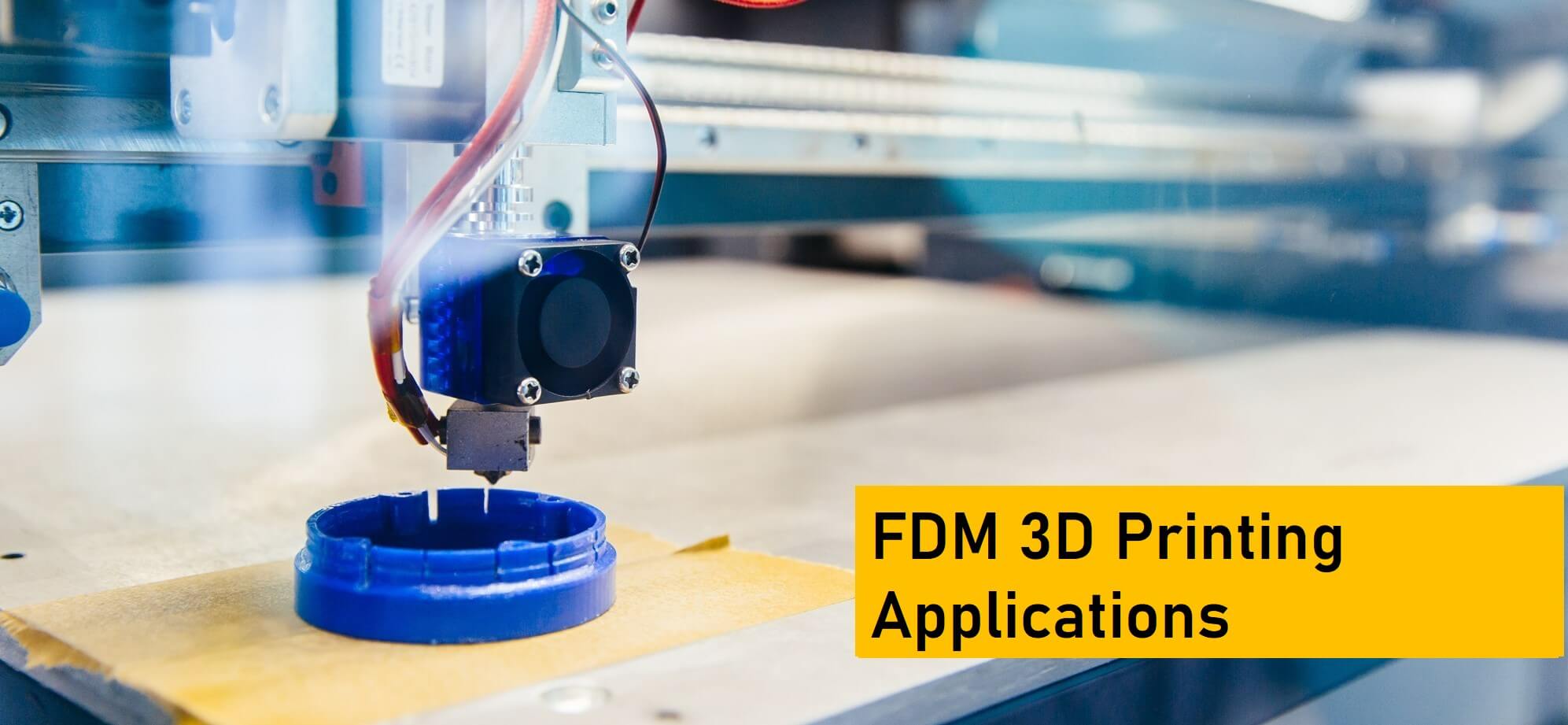
FDM 3D Printing Applications

Getting Ready for Industry 4.0

Enterprises have been switching from subtractive manufacturing to additive manufacturing to become a part of Industry 4.0. But they look for technologies effective in reducing production time and costs. FDM is a simple and cost-effective 3D printing technology.

Enterprises have the option to choose from a wide range of FDM 3D printing machines and materials. Also, they can reduce upfront investment by availing of professional FDM 3D printing services. Hence, manufacturers leverage FDM 3D printing to get ready for Industry 4.0.

Rapid Prototyping

Large companies invest in R&D to outperform competitors by coming up with unique ideas. Researchers evaluate the next best idea elaborately by making prototypes. In addition to reducing production time, prototypes help engineers identify and prevent potential problems. Researchers find it easier to create prototypes from digital files using FDM 3D printers. Also, they use the printer to create multiple versions of the prototype without increasing time and cost.

Testing Design Ideas

Automobile and aerospace companies these days boost user experience by producing innovative parts and customizing existing parts. They invest in FDM 3D printing machines and materials to test new design ideas without escalating project costs. Researchers can use an FDM 3D printer to evaluate new design ideas ad alter existing designs without delaying product launch.

Producing Replacement Parts

No automobile company can impress and attract customers without providing outstanding customer service. Also, it cannot deliver outstanding customer service without ensuring fast and reliable delivery of spare parts. Leading companies have already transformed spare part management using 3D printing technologies.

They invest in FDM 3D printing to reduce the time and resources required to produce replacement parts for individual customers. Hence, many companies these days print spare parts instead of maintaining an inventory of spare parts.

Low-Volume Manufacturing

Companies opt for low-volume manufacturing to reduce time to market and identify potential market risks. But no company can produce a lower number of parts using conventional manufacturing technologies. 3D printing technologies like FDM make it easier for companies to scale up or scale down the production of parts on demand.

Engineers use FDM 3D printers to drive low-volume production without investing in expensive tooling and additional materials. The printers create opportunities for them to experiment with different thermoplastic filaments while reducing material wastage. Also, engineers can change a part simply by altering the digital 3D model.

Creating Pre-Surgical Models

Pre-surgical models help surgeons reduce the risk of complications using the right instruments. Hence, surgeons develop patient-specific surgical models as part of pre-surgical planning. FDM 3D printers make it easier for surgeons to develop patient-specific surgical models that replicate specific organs of a patient exactly.

Producing Functional Prosthetics

The conventional manufacturing techniques make the production of functional prosthetics complicated and expensive. But medical practitioners find it easier to produce functional prosthetics for individual patients using FDM 3D printers. In addition to supporting personalization, FDM 3D printing makes prosthetic lambs affordable for a large number of people.

Non-Industrial Applications of FDM 3D Printing

Promoting Experimental Learning

Many schools, colleges, and universities these days invest in FDM 3D printers to promote experimental learning. Students use FDM 3D printers to visualize concepts and create models while mastering one of the important next-generation technologies. Recently, students surprised everyone by building, testing, and finetuning DIY drones using FDM 3D printing.

Personalizing and Customizing Gifts

FDM 3D printer helps enthusiasts and innovators unleash their creativity. Many people these days use FDM 3D printers to produce customized gifts for friends. They make the gift items like mobile covers, planters, key chains, and lamps look unique by designing their own digital 3D models or redesigning existing 3D models.

Replacing Household Items

Homeowners found it difficult to purchase and replace household items during the COVID-19 lockdowns and shutdowns. Many people use FDM 3D printers to produce household items during the pandemic. They use FDM printers to replace clips, buttons, hooks, showerheads, and other household items while working from home.

Changing Home Décor Styles

Many homeowners these days impress guests by changing home décor style as the season changes. FDM 3D printing machines help homeowners create unique and customized pieces on their own. Many homeowners these days use FDM 3D printers to produce beautiful home décor before the season changes.

Conclusion

In addition to being the most commonly used 3D printing technology, FDM has been evolving consistently. For instance, users nowadays have the option to choose from conventional and cloud-based FDM 3D printers. Likewise, they can experiment with many classic and innovative 3D printing materials.

Professional FDM 3D printing services create opportunities for individuals and enterprises to produce parts using the desired printing machine and filament. Hence, FDM 3D printing applications will continue to evolve in the future. The new use cases will keep the popularity of FDM intact while overcoming the major shortcomings of this 3D printing technology.

Sunday, 1 May 2022

3D Printing Companies in Kolkata


The number of individuals and enterprises leveraging 3D printing technologies has been growing consistently. But 3D printing adaption is still a nascent stage in developing countries like India. 3D printing companies have been making various 3D printing technologies accessible and affordable to end-users in a variety of ways. Several market research and forecast studies suggest a consistent growth of the 3D printing market in India.

Many companies and startups have been popularizing 3D printing technologies in Kolkata. Most of these 3D printing companies in Kolkata offer customized 3D printing services. You can avail of customized 3D printing services to transform digital three-dimensional models into solid three-dimensional objects. At the same time, you can 3D-print a variety of items yourself buying 3D printers and 3D printing filaments from specific 3D printing companies in Kolkata.

While living in Kolkata, you have the option to choose from many local and remote 3D printing companies based on your project needs. But you should not shortlist the 3D printing companies only based on their corporate office addresses. It is always important to consider the reputation of 3D printing companies to avail the machines, services, or materials required to produce high-quality items.

Shortlisting Some of the Leading 3D Printing Companies in Kolkata

MELT

MELT is one of the leading 3D printing companies in Kolkata. It enables clients to 3D-print a variety of items by supplying AutoCAD software, 3D printers, 3D scanners, and 3D printing filaments. At the same time, it helps clients to overcome constraints related to skills and budgets by providing 3D designing, 3D printing, and 3D scanning services. You can share your project needs with MELT by uploading the digital 3D model. Also, you can customize the 3D printing services by choosing the appropriate 3D printing technology, material, and file unit.

Turtle Tech

Turtle Tech is a Kolkata-based 3D printing company. It offers SLS and FDM 3D printing services, along with a wide range of materials and filaments. You can customize the 3D printing services provided by Turtleye Tech by combining the appropriate material with an FDM/SLS 3D printer. The company helps you to compare the right material for your project by highlighting the pros and cons of every filament. You can receive a quote for Turtleye Tech by sharing your project needs in the form of a digital file.

FusionStream

FusionStream is one of the local3D printing companies in Kolkata. It has been providing both 3D printer manufacturing and 3D printing services to clients. But FusionStream delivers 3D printing services in offline mode. You can receive a quote by submitting your phone number and email address through its website. But you do not have the option to share your requirements by uploading a digital file. The company will contact you to understand your requirements.

Aurum3D

3D Printing Companies in Kolkata

The Bangalore-based 3D printing company has been providing 3D printing services and supplying 3D printing filaments to clients in Kolkata through its website. You should consider Aurum3D to avail of FDM, SLS, or SLA 3D printing services, along with 3D designing and 3D scanning services. Also, you can customize the 3D printing services by choosing the appropriate material type, support material, print resolution, infill percentage, and layer height while uploading the STL file. At the same time, you can order a variety of 3D printing materials – resin, powder, and plastics – according to your specific project needs.

Think3D

The Hyderabad-based 3D printing company supplies 3D printing materials as well as provides 3D designing, 3D scanning, and 3D printing services. Think3D uses its own facility to provide a variety of 3D printing services – FDM, SLS, SLA, DMLS, MJP, and PJP - to clients in Kolkata. It facilitates 3D printing service customization by allowing you to define important aspects of the 3D-printed item while uploading the digital file. Also, you have the option to order a variety of materials – plastic, metal, and elastomers – through its website.

WOL3D

This Mumbai-based 3D printing company has branch offices in several cities, including Kolkata. WOL3D allows you to buy 3D printers, 3D scanners, 3D models, filaments, accessories, and spare parts. In addition to manufacturing various 3D printers, WOL3D is the master distributor of leading international manufacturers. You should consider the 3D printing company to convert your ideas into solid 3D dimensional items by buying a slew of 3D printers and filaments. You can further create prototypes using FDM 3D printing technology by availing of the 3D prototyping services provided by WOL3D.

Srijan Creations

Srijan Creations is one of the 3D printing companies in Kolkata that supply 3D printers, offer 3D printing services, and conduct 3D printing workshops. You can attend the classes and workshops conducted by this company to learn various 3D printing technologies and 3D-print a variety of items. At the same time, you can avail of 3D printing services to convert your ideas into solid three-dimensional objects. However, you have to contact Srijan Creations by sending a message or making a phone call as the company delivers 3D printing services and solutions in offline mode.

Skubotics

Skubotics has been popularizing 3D printing technologies in Kolkata by providing training and organizing workshops. The training programs and workshops aim to make teachers, students, hobbyists, and working professionals familiar with widely used 3D printing technologies. You can attend the training program or workshop to learn how to express your ideas in the form of a digital 3D model and how to convert the digital model into a solid three-dimensional object. Also, you get an opportunity to access a custom-made 3D printer and use it to produce solid three-dimensional objects.

While comparing and shortlisting 3D printing companies in Kolkata, you must remember that most enterprises these days offer 3D printing services and supply 3D printers/filaments through their websites. Hence, you can buy high-end 3D printers and high-quality 3D printing services opting for a company whose corporate office is not located in Kolkata.

Tuesday, 22 March 2022

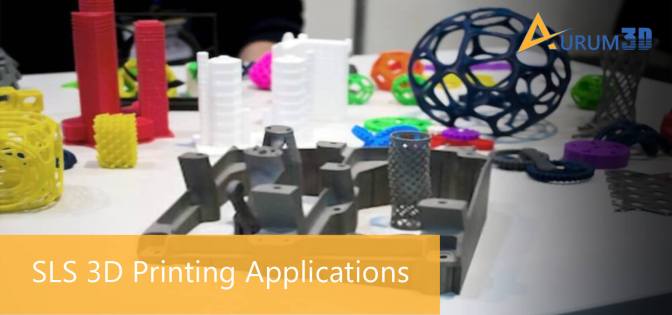
SLS 3D Printing Applications

You can create a solid three-dimensional object from three-dimensional digital models using several additive manufacturing or 3D printing technologies. Each 3D printing technology creates the object, model, part, or product physically in a specific way. Selective Laser Sintering (SLS) is one of the mature and widely used 3D printing technologies.

As the name suggests, this additive manufacturing technology creates solid parts by fusing or sintering nylon powder selectively using a high-power laser. Many engineers opt for SLS 3D printing to produce strong and durable parts with complex geometries. Also, they can enhance the look and feel of the 3D-printed structures during post-processing through sanding, dyeing, and smoothing.

Both companies and startups have been transforming and revolutionizing SLS 3D printing by fostering innovation and research. Some companies replace standard CO2 laser with new-age fiber laser to make the SLS 3D printer effective in sintering powder more quickly by increasing power density. Likewise, some companies are finetuning SLS 3D printers to reduce material wastage by using one powder as the primary material and another powder as supporting material.

SLS 3D Printing Applications

According to Wikipedia, “SLS technology is in wide use at many industries around the world due to its ability to easily make complex geometries with little to no added manufacturing effort. Its most common application is in prototype parts early in the design cycle such as for investment casting patterns, automotive hardware, and wind tunnel models.

At present, SLS is used commonly by enterprises to facilitate rapid prototyping and production of functional parts. But the SLS 3D printing applications and use cases vary across industries. We can summarize the applications of this additive manufacturing technology based on use cases created by enterprises from various sectors.

Understanding SLS 3D Printing Applications across Industries and Verticals

Manufacturing Industry

One of the key advantages of SLS 3D printing technology is design freedom. Unlike traditional production methods, SLS 3D printing helps engineers to design products with unusual shapes and complex geometries without escalating production time and cost. Manufacturing companies leverage the design freedom to produce moving parts and interlocking parts. Also, this additive manufacturing technology is effective in facilitating small-batch manufacturing.

Aerospace Industry

SLS 3D printers use a flexible, durable, and lightweight material like nylon. Many engineers experiment with various forms of nylon to 3D-print parts tailored for flights and space travels. Also, they opt for SLS 3D printing for projects that require a few items like antennas, drones, aircraft parts, and satellites on demand. NASA has been incorporating 3D printed parts into aircraft engines to curtail both production time and cost.

Automotive Industry

The automotive industry has been using SLS 3D printers to create prototypes as well as produce functional parts. The automotive companies leverage key advantages of SLS 3D printing technology – speed, accuracy, reliability, and durability – to produce end-user components on demand.

Many companies use this additive manufacturing technology to replace obsolete components of vintage cars. 3D scanners make it easier for them to replicate the obsolete components exactly in the form of a digital 3D model. An SLS 3D printer can produce the out-of-stock components physically from the digital files.

Mechanical Industry

Mechanical engineers use SLS 3D printers to create innovative devices, components, and systems by combing principles of physics and mathematics in a variety of ways. Unlike other 3D printing technologies, SLS makes it easier for them to convert out-of-box ideas into components and devices by providing design freedom. Also, the components printed with SLS 3D printers meet varying mechanical requirements through high-dimensional accuracy.

Medical Industry

The medical industry leverages SLS 3D printing to produce complex medical devices accurately and precisely. As mentioned earlier, SLS 3D printers can produce durable and strong items with complex geometries and varying forms. Medical device manufacturers leverage these benefits to produce patient-specific prosthetics and orthotics. They further explore ways to optimize SLS 3D printing technology to fabricate human organs with 100% accuracy and authenticity.

Footwear Industry

SLS reduces 3D printing time by several hours. The reduced printing time makes it easier for footwear companies to produce a variety of insoles according to the varying needs of customers. SLS 3D printing is used widely by footwear companies to produce molded insoles, comfort insoles, and custom orthotics tailored for individual patients. Footwear companies use thermoplastic or nylon as the primary material to print customized insoles that provide support to and ease the pain of patients with flat feet and other foot disorders.

Several market analysis reports forecast the consistent growth of the global SLS 3D printing market over the next few years. Hence, the popularity of SLS 3D printing will remain intact despite the growing popularity of consumer and desktop 3D printing. Enterprises will leverage this mature and reliable additive manufacturing technology by creating new use cases regularly. Also, they will contribute towards evolving SLS 3D printing through research and development (R&D).

About Aurum3D

Aurum3D is one of the leading 3D printing companies in Bangalore. We have been working with various new-age areas like Drone manufacturing and Electric vehicle manufacturers in multiple areas like prototyping and custom 3D printing. You can get in touch with us for your custom requirements in electric vehicle manufacturing.

References:

https://www.shapeways.com/blog/archives/41152-top-applications-for-sls-3d-printing.html

Saturday, 12 March 2022

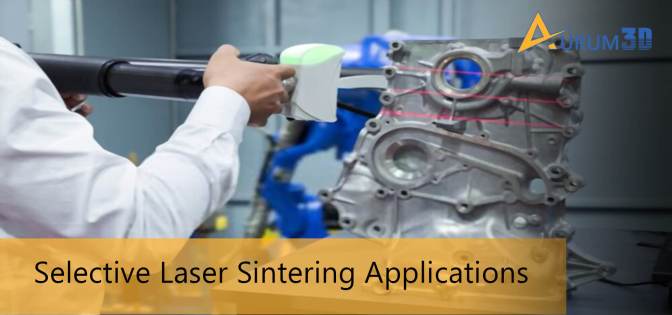
Selective Laser Sintering Applications

You can use a 3D printer to construct a variety of three-dimensional objects physically from digital 3D models. But you can boost the quality and usability of the 3D-printed object only by choosing the appropriate 3D printing technologies. Engineers often opt for selective laser sintering (SLS) as a fast and cost-efficient 3D printing technology. You can further leverage this widely used 3D printing technology to construct items with higher dimensional accuracy and better chemical and mechanical properties.

While planning selective laser sintering applications, you have the option to choose from various production-grade nylon materials in powder form. You can further boost the SLS 3D printing process using 3D nesting software. Enterprises from various sectors use SLS 3D printing technology to print production parts, complex prototypes, innovative tools, and complex parts. They have been extending selective laser sintering applications by creating new use cases regularly.

Varying Selective Laser Sintering Applications and Use Cases

Minimize Material Wastage

Selective laser sintering is often described as a zero-waste 3D printing technology. Unlike other 3D printing technologies, SLS enables engineers to recycle-sintered powdered materials. The non-sintered powdered materials can be recycled after the 3D-printing process without investing in extra time and effort. The new-age SLS 3D printers are built with features to combine new powder and recycles powder seamlessly. That is why; enterprises from various industries opt for selective laser sintering to curtail overall printing costs by reducing both material consumption and material wastage.

Customization and Low-Volume Production

SLS 3d Printing

In addition to minimizing material wastage, selective laser sintering is one of the fast 3D printing technologies. Its effectiveness in reducing printing time and cost makes SLS one of the preferred additive manufacturing technologies for low-volume production. Engineers further use an SLS 3D printer to produce customized products and models quickly based on varying customer needs. Enterprises from many sectors facilitate low-volume production and product customization through selective laser sintering applications.

Increase Throughput

SLS enables enterprises to produce customized parts in low-volumes. It further constructs parts and models with no support structures. Hence, enterprises leverage this industrial additive manufacturing technology to deliver a higher number of parts in increasing throughput. The additive manufacturing technology allows engineers to increase throughput without impacting the part’s quality, resolution, accuracy, and surface finish. Many enterprises these days opt for new-age SLS 3D printers to increase throughput and accelerate high-volume production by applying 3D nesting techniques.

Replace Subtractive Manufacturing Methods

SLS is one of the fast and most cost-efficient 3D printing technologies. It enables manufacturers to build production parts, complex prototypes, and end-use components without escalating costs. The manufacturers can further create strong and durable products using a variety of materials. SLS makes it easier for engineers to eliminate the design restrictions associated with conventional production methods. That is why; manufacturing companies find it easier to replace subtractive manufacturing methods with selective laser sintering.

Facilitate Rapid Prototyping

As mentioned earlier, selective laser sintering forms structures by sauntering powder filaments using a high-power laser. The high-power laser beams sinter and blends small powdered grains more efficiently. Hence, it becomes easier for engineers to produce complex prototypes with high precision while experimenting with multiple materials. Also, the engineers can use and evaluate the 3D-printed prototypes immediately after the post-processing stage. Selective laser sintering is currently used widely by manufacturers to add accuracy and precision to the rapid prototyping process.

Produce Heat-Resistant and Chemical-Resistant Parts

SLS facilitates the construction of strong and durable parts using a variety of materials. Engineers also have the option to use 3D printing technology to produce functional parts and tools that can resist both heat and chemicals. They can further produce parts with complex geometries, mechanical joints, or living hinges without increasing printing costs. That is why; SLS is currently used widely by engineers to produce a wide variety of industrial products according to varying process needs.

Create Innovative Tooling

The filaments and materials used in the SLS 3D printing process are effective in enduring a higher amount of stress and absorbing moisture. Also, selective laser sintering helps enterprises to create tools and items that are both strong and durable. That is why; enterprises opt for selective laser sintering to produce a variety of tools, fixtures, and jigs with intricate patterns and complex geometries. Engineers evaluate and fine-tune these complex and innovative tools through rapid prototyping.

Simplify Jewelry Design and Production

While using selective laser sintering, engineers have the option to use metal-based materials like copper polyamide or rapid steel. The support for metal-based materials makes SLS one of the widely used 3D printing technologies in the jewelry industry. Jewelry designers collaborate with 3D artists and engineers to design new jewelry pieces through the direct fabrication of metal designs. Many jewelers further use SLS printers to design personalized and unique pieces of jewelry for their clients.

Keep Medical Treatments Safe

Selective laser sintering is one of the 3D printing technologies that are compatible with commonly used dental materials like thermoplastic, plastic, metal, and ceramic. Also, it produces dental prosthetics with a higher accuracy level. That is why; manufacturers from dental industries opt for this industrial 3D printing technology to fabricate personalized dental prosthetics using ceramic or metal. Dentists have been integrating SLS into their routine practice to perform dental treatments safely. Likewise, physicians use SLS 3D printers to conduct feasibility studies by producing components and prototypes on-demand.

You can opt for SLS 3D printing to construct strong and durable three-dimensional items with high-level accuracy. But you must focus on streamlining the SLS 3D printing process while comparing selective laser sintering applications. Also, you should focus on customizing the printing process by choosing the right SLS 3D printer and the right material.

References:

https://www.3dsystems.com/selective-laser-sintering

https://3digiprints.com/3D-Help/selective-laser-sintering-sls.php

https://www.sciencedirect.com/topics/materials-science/selective-laser-sintering

https://journals.sagepub.com/doi/10.1243/0954405991516912

http://www.cs.cmu.edu/~rapidproto/students.00/jhong/SLS/#materials

https://top3dshop.com/blog/sls-printing-overview#:~:text=The%20SLA%20technology%20is%20used,for%20dental%20and%20surgical%20purposes.

https://www.treatstock.com/guide/article/116-why-every-industy-needs-sls-3d-printing

https://www.hubs.com/knowledge-base/selecting-right-3d-printing-process/#by-use-case

Sunday, 27 February 2022

Top 3D Printing Blogs to Follow in 2022

3D printing or additive manufacturing has been transforming various industries by facilitating rapid prototyping, low-volume production, and manufacturing cost reduction. A steady increase is being noted in the number of students, hobbyists, and professionals using 3D printers to produce solid three-dimensional items from digital models.

But no person can 3D print an object, model, or part accurately and precisely without combining the right 3D printing technology and filament. Also, she needs to focus on three important stages in the 3D printing process – pre-processing, building, and post-processing.

In addition to supplying 3D printers and providing 3D printing services, many companies passionately believe in popularizing 3D printing technologies. They publish blogs regularly to make beginners and enthusiasts familiar with various 3D printing technologies and materials.

3d printing company

We have shortlisted some of the top 3D printing blogs using multiple parameters. The list of top 3D printing blogs will help beginners and enthusiasts to understand widely used 3D printing technologies Also, they can leverage the information to convert their innovative ideas into three-dimensional objects by managing 3D printing projects successfully.

Top 3D Printing Blogs Enthusiasts and Learners Should Follow in 2022

3D Printing Industry

The global media company has been publishing blogs regularly to make enthusiasts aware of 3D printing and 3D scanning technologies. The online resources created by 3D Printing Industry helps readers keep track of the latest development in 3D printing and 3D scanning. In addition to supporting a dedicated team of content writers, the company has been posting content created by external contributors. Hence, a reader can get updated information about 3D printing and 3D scanning technologies by following this popular 3D printing blog.

3DPrint.com

The dedicated news portal helps professionals and enthusiasts to access the latest news related to the 3D printing industry. A reader can follow 3DPrint.com to know the latest information related to 3D printing, 3D scanning, 3D software, and 3D filaments. Also, the news portal delivers hands-on information about various industries using 3D printing technologies. A subscriber can follow this 3D printing blog to access additive manufacturing industry news and stories on a regular basis.

3D-Print.today

The online news magazine delivers the latest news and up-to-date information about the 3D printing industry. It enables readers to get up-to-date 3D printing industry information in various forms – articles, blogs, videos, fresh news, and opinions. A reader can follow 3D-Print.today to get both detailed information and the latest news about various 3D printing technologies. Also, she can leverage the information to buy the right 3D printer and 3D printing filaments for various projects.

Develop 3D

A reader has the option to choose from both print and digital editions of Develop3D Magazine. The online magazine helps readers to access the latest news and updated information about 3D printing, additive manufacturing, and CAD. The readers can access the online edition of the magazine free of cost. Also, they can visit the website regularly to get news, reviews, features, opinion, and videos. They can further leverage the reviews written by seasoned professionals to make informed decisions while planning and managing 3D printing projects.

Aurum3D

Aurum3D is one of the major 3D printing companies in Bangalore. The team at Aurum3D has expertise in providing 3D printing services to clients from many industries. Also, the professionals are passionate about making 3D printing technologies accessible to students, hobbyists, and enthusiasts. A reader can follow the popular 3D printingblos to understand the pros and cons of widely used 3D printing technologies. The blogs help readers to choose the right 3D printing technology and material for their projects. Also, readers can read the blogs regularly to track emerging 3D printing trends and learn new use cases being created across industries.

Tech Crunch

The online newspaper has built a reputation by publishing content related to technologies and entrepreneurship. Tech Crunch has been helping entrepreneurs and startups to leverage cutting-edge technologies like 3D printing by publishing blogs, newsletters, audio, and videos. An enthusiast can follow this popular 3D printing blog to access multi-format digital content created by experienced writers and contributors. The blogs posted on Tech Crunch help readers to differentiate between various 3D printing technologies and filaments based on varying project needs.

3D Platform

The 3D Platform has been popularizing additive manufacturing technologies by supplying 3D printers, accessories, spare parts, and spare parts. The professionals at 3D Platform aim to solve common 3D printing problems by publishing insightful blogs regularly. A reader can follow this blog to learn some of the widely used 3D printing technologies as well as common 3D printing problems. At the same time, these blogs help readers to buy the right 3D printer and use the 3D printer to produce a variety of items on their own.

3D Systems

In addition to providing 3D printing services, 3DSystems has been manufacturing 3D printers, 3D scanners, and 3D printing filaments. At the same time, 3DSystems is passionate about making enthusiasts and learners familiar with various 3D printing technologies. A reader can access the blogs published by 3DSystems to gather up-to-date information about specific 3D printing technologies as well as know the new use cases being created in specific industries. The blogs posted on 3DSystems are written by seasoned professionals in various languages. Hence, the blogs help readers to know the latest 3D printing news and trends in their preferred languages.

Simplify 3D

Simplify3D has been simplifying the 3D printing process by providing sophisticated slicing software. Many professionals leverage the slicing software to provide 3D printers with the instructions required to produce solid three-dimensional objects from digital files. In addition to updating the slicing software regularly, Simiplify3D has been popularizing additive manufacturing technologies by publishing blogs regularly. Both professionals and learners can follow the Simplify3D Blog to access learning resources, general news, and customer success stories.

3D printing technologies have been evolving consistently. Likewise, 3D printing trends change at regular intervals. Beginners and enthusiasts can follow these top 3D printing blogs to learn new 3D printing technologies and track emerging 3D printing trends. However, they must find time to read the blogs regularly to leverage 3D printing technologies fully. It is also advisable for readers to keep their knowledge up to date by following multiple 3D printing blogs.

Friday, 25 February 2022

Types of Additive Manufacturing

Enterprises from various industries have been switching from subtractive manufacturing to additive manufacturing to curtail production time and cost significantly. As its name indicates, additive manufacturing or additive layer manufacturing produces a variety of three-dimensional objects physically by adding materials layer by layer through a computer-controlled process.

According to AdditiveManufacturing.media, “’ Additive manufacturing’ (AM) describes the use of 3D printing to make functional components, including tools and end-use production parts. Unlike ‘subtractive manufacturing’ such as processes machining, where parts are created by removing material, additive manufacturing builds geometries by ‘adding’ feedstock such as filament, wire or powder.” Additive manufacturing produces solid parts, models, prototypes, and products by leveraging 3D printing. 3D printing technologies produce various objects from three-dimensional digital models by adding materials or filaments layer by layer. In addition to reducing material consumption and wastage, additive manufacturing enables you to produce parts with complex geometries and varying shapes.


3d printing bangalore


You also have the option to choose from different types of additive manufacturing according to the precise project needs. Likewise, you can use additive manufacturing technologies to produce objects using a variety of materials – powder, resins, and plastics. That is why; you should understand and compare some of the widely used additive manufacturing technologies to streamline the manufacturing process.

Brief Overview of 7 Widely Used Additive Manufacturing Technologies

1. Binder Jetting:

Binder jetting technique creates parts by joining powder material using a binder or binding liquid during the fusion process. You have to choose the appropriate binder or binding liquid according to the type of powder used in the additive manufacturing process. This type of additive manufacturing allows you to choose from various types of materials – ceramics, metal, and polymer. Also, you can make the object appealing by adding a wide range of colors. But you need to put extra time and effort into post-processing activities. Also, you cannot use this type of additive manufacturing to build structural parts with strength and accuracy.

2. Material Extrusion:

This popular form of additive manufacturing builds objects by depositing thermoplastic or composite filament continuously. These industrial 3D printers are designed with extruding nuzzles through which the thermoplastic filament is fed. The machine uses heat to fuse the filament deposited on the build platform layer by layer. Many enterprises opt for material extrusion as an easy-to-use and user-friendly additive manufacturing technology. Material extrusion allows you to build objects using a variety of print materials without escalating material costs. But this technique requires support. Also, it is not effective in producing strong and durable parts.

3. Material Jetting:

This type of additive manufacturing builds three-dimensional objects by depositing droplets of wax-like materials selectively onto the build platform. The wax-like material is deposited in layers on top of each other. The part is formed as the material becomes cool and solid gradually. The printed object is produced after the support structure is removed or melted. Enterprises opt for material jetting technology while producing parts with superior surface finishing and outstanding accuracy. But wax-like material often makes the printed item fragile. Also, you do not have the option to choose from a wide range of wax-like materials for this additive manufacturing process.

4. Powder Bed Fusion:

The powder bed fusion method builds parts by melting plastic or metal powder particles using a variety of energy sources. The energy source melts the powder which is subsequently fused and solidified to create the pattern. This category of 3D printers is developed with two build chambers and a creating roller. While using powder bed fusion technology, you have the option to choose from and combine a variety of materials. Also, you can 3D-print industrial items with minimal support. But the additional post-processing increases the additive manufacturing time significantly. Also, this additive manufacturing technology is suitable for creating objects with weak structural properties and varying surface textures.

5. Sheet Lamination :

As the name indicates, the sheet lamination method produces objects by stacking and laminating multiple and thin layers of materials using a variety of ways – bonding, brazing, or ultrasonic welding. You need to use a CNS or laser cutting machine to form the final shape of the object. Sheet lamination is one of the fast and cost-efficient additive manufacturing methods. It enables you to manage materials effortlessly without providing support structures. But you must arrange a larger working area and spend additional time on post-processing activities. You do not have the option to choose from a wide range of materials while using sheet lamination techniques. You need to use the appropriate sheet lamination technique to achieve the desired bonding strength.

6. Directed Energy Deposition

Direct energy deposition creates three-dimensional objects by melting wire-based or powder-based printing material using a variety of energy sources – laser, plasma arc, and electronic beams. Enterprises these days use the direct energy deposition method to facilitate hybrid manufacturing. Also, this type of additive manufacturing is used widely to create items with complex shapes using metal, ceramic, or polymer. In addition to accelerating the additive manufacturing process, the direct energy deposition method is effective in building large, strong, and dense parts. But you need to incur high capital expenditure to streamline the additive manufacturing process.

7. Vat Photopolymerization

The vat photopolymerization method creates three-dimensional items by converting photopolymer liquid resin into hard plastic. It cures the photopolymer liquid resin in a vat layer by layer using an ultraviolet laser. Enterprises opt for this form of additive manufacturing to create large items with optimal accuracy and superior finish. This method created parts in a shorter amount of time. But you lack the option to choose from a variety of photopolymer liquid resins. Also, you have the put extra time and effort to remove additional resin during the post-processing. Vat photopolymerization is one of the more expensive additive manufacturing technologies. While considering and comparing various types of additive manufacturing, you must not ignore some of the widely used 3D printing technologies. Both 3D printing and additive manufacturing technologies build solid objects depositing materials or filaments layer by layer based on CAD files. But additive manufacturing technologies are more advanced and rigorous than 3D printing technologies.

About Aurum3D Aurum3D is one of the leading 3D printing companies in Bangalore. We have been working in multiple technologies of 3D printing like FDM, SLA, and SLS 3D Printing in areas like prototyping and custom 3D printing.

References:

https://www.k3syspro.com/advice-centre/erp-advice/whats-the-difference-between-3d-printing-and-additive-manufacturing/

https://www.additivemanufacturing.media/articles/additive-manufacturing-and-3d-printing-are-two-different-things

https://additivemanufacturing.com/basics/

https://www.additivemanufacturing.media/kc/what-is-additive-manufacturing

https://www.appliedengineering.com/blog/2021/1/22/7-types-of-additive-manufacturing

https://blog.spatial.com/types-of-additive-manufacturing

https://www.firetrace.com/fire-protection-blog/additive-manufacturing

Most Innovative 3D Printing Companies in India

In the age of Industry 4.0, no business can increase revenue, gain market share, and promote customer loyalty without fostering innovations....